
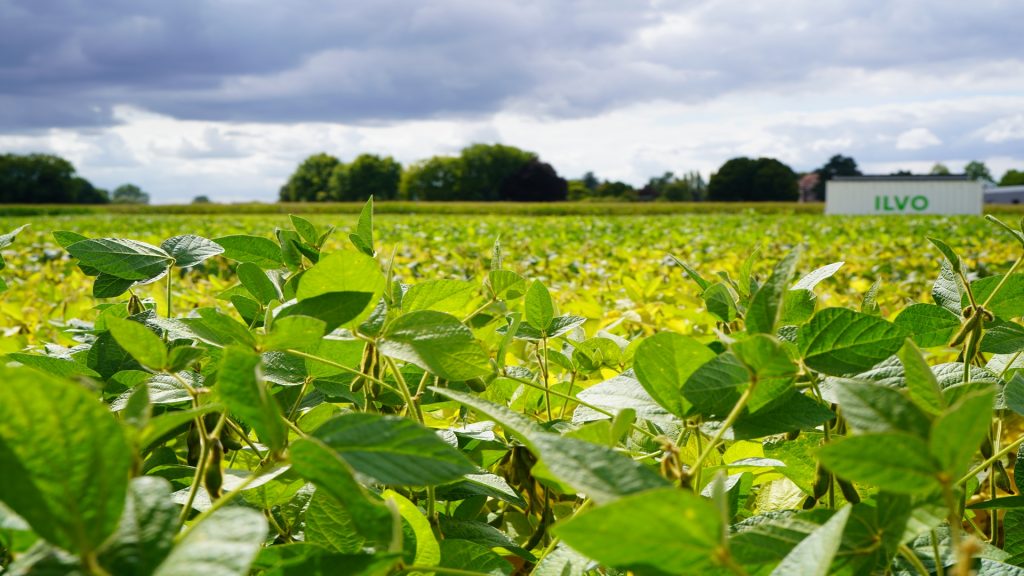
Soybean is a valuable crop worldwide but breeding programmes aiming to improve productivity still face challenges. To address this, we combined genomic prediction (in essence, asking “we know your DNA, but what do you look like?”)- with the identification of key genetic markers to better understand how genes work in relation to their environment.
By using a workflow that decomposes plant performance (BLUPs) in specific environments into two components: a genetic effect (G) and the interaction with the environment (GxE), we were able to increase the predictive ability for the interaction component compared to traditional single-component models.
We then constructed random forest–based models by selecting key genetic markers, so that these models can better account for interactions among markers and reveal which markers are most influential in specific environments. By focusing on a smaller subset of 50 uncorrelated key markers, we developed models that were simpler, easier to interpret, and more cost-effective; yet performed just as well as more complex, marker-dense models.
In the final step of our study, the performance of our models was validated using the soybean genotype set developed in the previous EU research project ‘EUCLEG’, which was phenotyped in field trials deliberately conducted at two contrasting locations: ILVO in Belgium (representing northwestern Europe) and IFVCNS in Serbia (representing southern Europe). Further validation of the models will be conducted using datasets generated in BELIS.
The results have been published in an open-access scientific journal:
Verbrigghe, N., Muylle, H., Pegard, M. et al. Disentangling soybean GxE effects in an integrated genomic prediction and machine learning-GWAS workflow. Plant Methods 21, 119 (2025). https://doi.org/10.1186/s13007-025-01434-0
Niel Verbrigghe – Plant Sciences Unit, Flanders Research Institute for Agriculture, Fisheries and Food (ILVO), Melle (Belgium)
