General

A Europe-wide survey on legumes by South Westphalia University of Applied Sciences

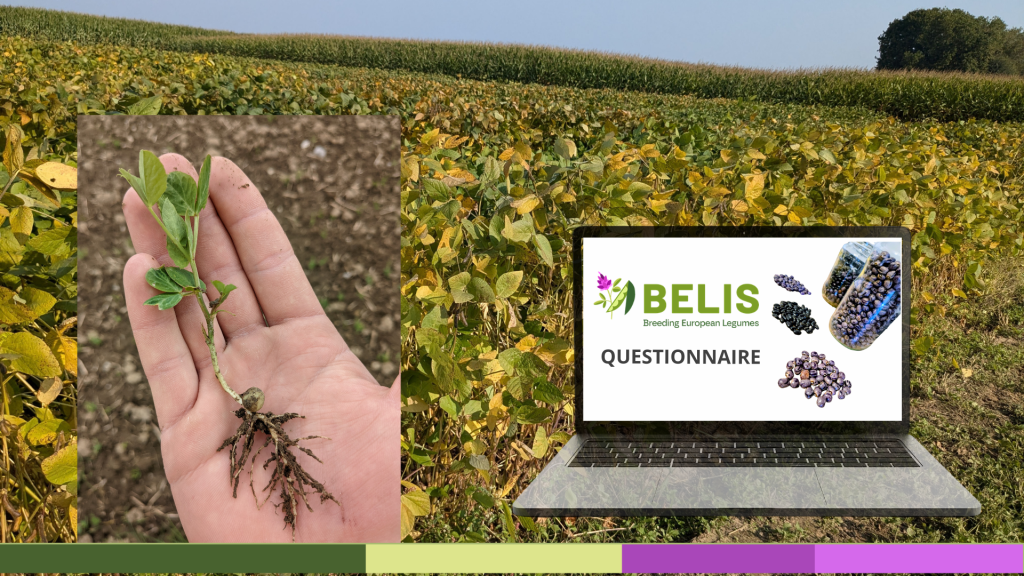
As part of the Horizon Europe research project BELIS (Breeding European Legumes for Increased Sustainability N°101081878), South Westphalia University of Applied Sciences is conducting a Europe-wide survey of those who produce, process, use or consume legumes. The aim is to identify which characteristics are particularly relevant from the perspective of the various stakeholders, in order to provide practical information for legume breeding and develop varieties that offer real added value to all actors along the value chain. The more feedback received, the more precisely research and breeding activities can be tailored to actual needs, thereby making a major contribution to the further development of the European protein sector.

Participation from all stakeholders along the legume value chain is welcomed, from seed production, agriculture, feed and food processing, and trade to the end consumer of legume products. The questionnaire can be completed without any special knowledge and takes about 5 minutes to complete.

Participation contributes to ensuring that future breeding activities are more closely aligned with the actual requirements of each sector — for example through more suitable varieties, more differentiated raw material qualities, more efficient processing processes, more stable market conditions or the availability of high-protein plant-based foods.

The intention of the BELIS project is to increase the importance of legumes in Europe through innovations in plant breeding. Breeding progress is a key lever for improving the market situation and competitiveness of European legumes. A viable value chain, in turn, is the lever for further innovations in plant breeding.

The research question of the survey is: What are the specific requirements and expectations of legume breeding customers in Europe with regard to plant and grain characteristics of legumes? The survey can be accessed

Those interested in the results of the study are welcome to contact Lars Wernze (wernze.lars@fh-swf.de).

The BELIS project has received funding from the Horizon Europe research and innovation programme under the Grant Agreement N°101081878.

EU projects to enhance diversity, resilience and competitiveness of legumes — a satellite workshop at ILS5

BELIS is pleased to co-organise a dedicated satellite workshop at the 5th International Legume Society Conference (ILS5), taking place on 8 June 2026 in Dubrovnik, Croatia. Held on the opening afternoon of the conference (14:30–17:00), this event brings together four EU-funded projects — BELIS, LEGUME GENERATION, INCREASE and PROSPER — to share results, compare approaches and open new collaboration pathways in legume research.

Four projects, one shared ambition

Although each project has its own focus and consortium, BELIS, LEGUME GENERATION, INCREASE and PROSPER are united by a common goal: strengthening the diversity, resilience and competitiveness of legumes within European agricultural systems. This workshop is an opportunity to step back and consider what has collectively been achieved, and what can be built together going forward. After a short introduction from each project, the programme unfolds across two thematic sessions.

Session 1 — Tools and data for legume innovation

The first session showcases the genomic and bioinformatic infrastructure that the four projects have developed to accelerate legume breeding. BELIS will present two of its flagship contributions: the multi-species 60K SNP array platform covering pea, faba bean, white lupin, lentil and chickpea, and the BELIS legume database, a tool designed to store and query multi-species genetic and omic data and to support translational research across species. LEGUME GENERATION will contribute two presentations on applied genomics, including the LegGen Soy 5K Trait-Specific Marker Panel developed to unlock genetic variation for soybean breeding at northern latitudes. PROSPER will address molecular phenotyping and multi-omics integration as a means of elucidating and predicting seed traits and plant ecosystem services. INCREASE will close the session with an overview of innovative genomic approaches and sequencing strategies developed within its consortium.

Together, these contributions paint a picture of a rapidly maturing toolkit for legume genomics — one that is increasingly practical, multi-species and open to the wider research and breeding community.

Session 2 — Connecting stakeholders across the legume value chain

The second session shifts the focus from data and tools to people and partnerships. Legume research only delivers its full potential when it reaches breeders, processors, farmers and policymakers — and building those connections requires deliberate effort. BELIS will share its experience of developing productive relationships with breeders and processors, drawing on lessons learned throughout the project. The session will also feature a joint contribution from BELIS and INCREASE reflecting on their respective approaches to stakeholder engagement, the challenges encountered and the models that have proven most effective.

This session is designed to be genuinely interactive. Participants are encouraged to bring their own perspectives on what it takes to bridge the gap between scientific research and the realities of the legume value chain.

Join us in Dubrovnik

The workshop welcomes up to 40 participants and is primarily aimed at researchers, breeders, value chain actors and European policymakers. Full programme details are available on the ILS5 conference website.

The BELIS project has received funding from the Horizon Europe research and innovation programme under the Grant Agreement N°101081878.

New BELIS webinar: KASP markers linked to key agronomic traits for chickpea breeding

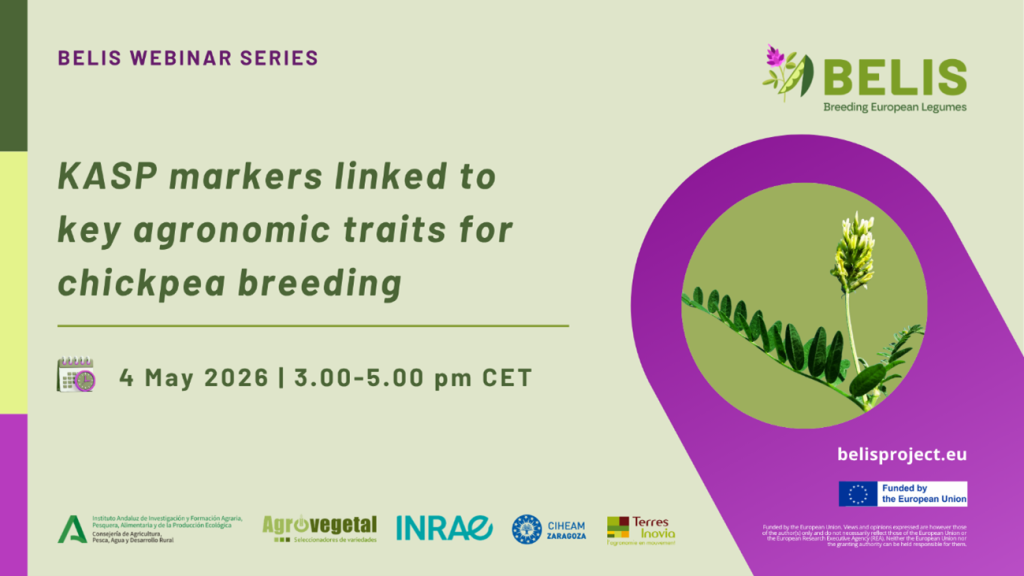
On 4th May 2026, the Horizon Europe BELIS Project (Breeding European Legumes for Increased Sustainability) will be organising a Webinar on “KASP markers linked to key agronomic traits for chickpea breeding”.

Webinar objectives

This webinar will address the use of KASP markers for marker-assisted selection in chickpea breeding, as well as the status of the breeding and seed production in southern Spain.

It will also introduce the European project BELIS – Breeding European Legumes for Increased Sustainability, focusing on 14 legume species, including 7 forage legumes (red clover, white clover, annual clover, alfalfa, sainfoin, bird’s-foot trefoil, and vetches) and 7 grain legumes (pea, faba bean, soybean, white lupin, lentil, chickpea, and common bean).

The main objectives of BELIS are:

  • Developing cost-effective breeding tools.
  • Improving the economic and regulatory environment for legume breeding.
  • Ensuring effective innovation transfer through a network of stakeholders, including breeders and seed industry, researchers, registration offices, extension services, feed and food industry, farmers.

The webinar will also introduce the stakeholder network being established within the BELIS project, including its goals, activities, benefits of joining, and the steps to become a member.
 

Target Audience

This webinar is specifically designed for professionals involved chickpea breeding, as well as in forage and grain legume breeding and utilization in Europe, including breeders and seed industry, researchers, registration offices, extension services, feed and food industry, farmers.

Access the programme and all the information about the webinar here.

  • Date of the webinar: 4 May 2026, 3.00 – 5.00 p.m. CET
  • Application deadline: 28 April 2026

The BELIS project has received funding from the Horizon Europe research and innovation programme under the Grant Agreement N°101081878.

Update on the Development of a Multi-Species Genotyping Array for Five Grain Legume Crops

We are pleased to announce the completion of Version 1 of the genotyping array developed under Task 4.1. The array comprises 15,566 SNP markers for pea (Pisum sativum), 15,582 for faba bean (Vicia faba), 11,009 for white lupin (Lupinus albus), and 10,580 markers each for lentil (Lens culinaris) and chickpea (Cicer arietinum).

Comprehensive marker information—including context sequences, positions mapped to the latest genome assemblies, and associations with identified QTLs—is accessible to BELIS consortium members via the project SharePoint.

INRAE and GEVES are currently conducting validation experiments using diversity panels representing all five species, assembled in collaboration with consortium partners. Results from these initial validation studies will be disseminated shortly. A dedicated training session covering array utilization and data analysis protocols will be scheduled following the release of validation results.

Researchers planning to utilise this genotyping tool in the near term are encouraged to contact BELIS coordination team.

The BELIS project has received funding from the Horizon Europe research and innovation programme under the Grant Agreement N°101081878.

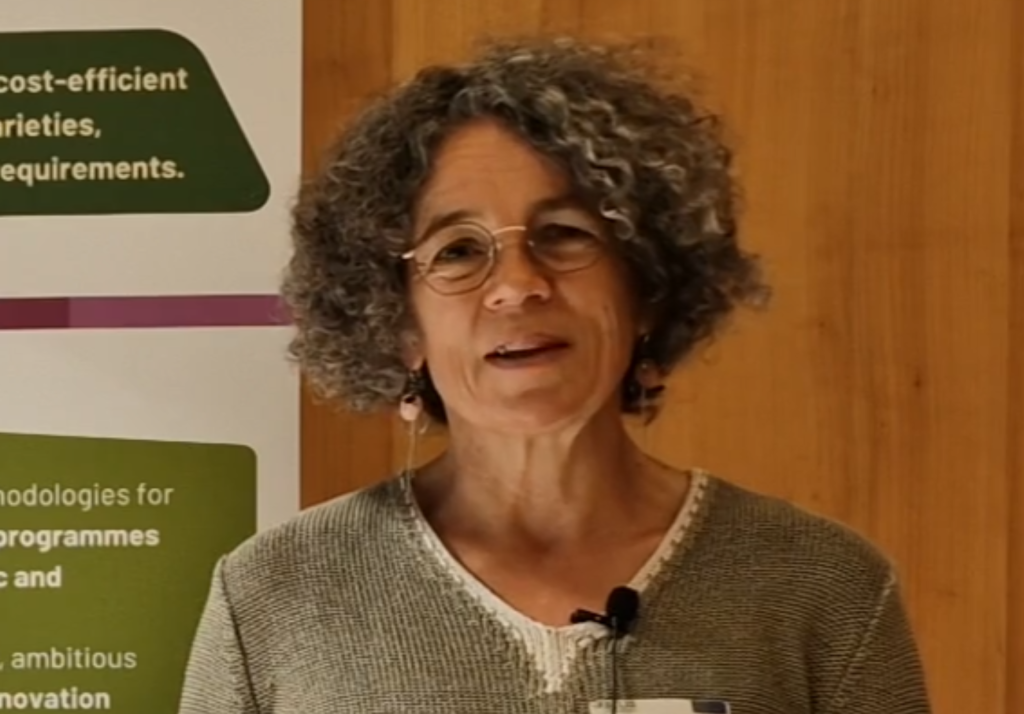
Why Legumes Matter: Insights from BELIS Project Coordinator Bernadette Julier

On the occasion of the World Pulses Day, we interviewed BELIS Project Coordinator Bernadette Julier, Research Director at the French National Institute for Agriculture, Food, and Environment (INRAE). Her work focuses on the genetics of forage legumes, particularly lucerne (alfalfa), with the goal of improving agricultural sustainability through protein autonomy, increased nitrogen fixation, and reduced pesticide use.

Why are legumes so important for sustainable agriculture and our food systems, and what inspired the creation of the BELIS project?

Legumes are unique for their ability to fix atmospheric nitrogen and to transform it into protein. They also enrich soils in nitrate, making it available for other crops, either associated with legumes or in rotations. In addition, plant proteins are valuable in human diets for their positive health impacts, and also for animal feeding. Unfortunately, legume crops in European agriculture are not predominant enough to provide these benefits on a broad scale and therefore the EU is importing proteins from abroad for animal feed and human food. Farmers often complain that legume cropping is not as profitable as grain crops, and even for forage production, they often find it easier to add nitrogen fertilisers to grasslands than to grow legume-rich grasslands. BELIS aims to accelerate legume breeding in order to provide improved, profitable, and well adapted legume varieties for farmers.

What are the main breeding priorities BELIS is addressing to make legumes more competitive and attractive for European farmers, both as grain crops and forage?

Yield, quality, disease and pest resistance, adaptation to frost and drought are recurrent breeding objectives for the main legume crops, but more genetic progress is still required. These same traits are also important for minor legume crops that offer specific adaptation features to climate, soil or use. In addition, studies are being conducted in BELIS on new quality traits, and resistance to emerging pathogens and pests.

How is BELIS integrating modern breeding techniques with traditional approaches to accelerate the development of new legume varieties? Are there any particularly promising innovations emerging from the project?

Molecular breeding has proven efficiency in many plants and animals but is still under-used in legumes. Development of molecular tools, identification of trait-associated markers, and ability to predict traits from sets of markers through genomic selection are emerging innovations. Phenotyping tools are also useful to better describe trait variation in large collections of genotypes. Cooperation between researchers and breeders is promising to release genetic innovations. BELIS is tackling this objective, with experimental breeding schemes as proof of concept to show that genetic progress can be much improved when combining the best tools for phenotyping and genotyping in breeding processes.

As we celebrate World Pulses Day, what message would you like to share about the future of legumes in our diets and on our farms?

The positive impacts of legumes in the “One Health” objective have to be understood by society and shared. Legumes are an excellent, tasty and healthy food. They are an excellent feed —either as grain or forage— for dairy cows, pigs, poultry, and others. Legumes are also an excellent source of reactive nitrogen in the field, that save fossil energy otherwise used to produce chemical nitrogen fertilisers, and thus limit nitrogen pollution in water and air.

World Pulses Day 2026 will be celebrated globally on 10 February, marking the annual United Nations observance that promotes the nutritional, environmental, and sustainable farming benefits of pulses like beans, lentils, chickpeas, and peas, highlighting their role in food security and healthier agrifood systems

The BELIS project has received funding from the Horizon Europe research and innovation programme under the Grant Agreement N°101081878.

Development of NIRS equations to predict biochemical composition of annual clovers

Annual clovers (Trifolium sp.) include a wide number of species used either as forage crops (sown in spring or in autumn) or as cover crops (sown in summer or autumn). Recent regulations requiring soil coverage between the harvest time of a cash crop and the sowing time of the next crop (autumn or spring), are encouraging the use of cover crops, which provide ecosystem services such as nitrogen sequestration or fixation and soil conservation. When annual clovers are used, the biomass obtained before the next cash crop sowing can be harvested as forage or left in the field as green manure. In both cases, the biochemical composition of the biomass affects its value. The biochemical composition of annual clovers is poorly described, and any breeding programme that aims at increasing the nutritional value of annual clovers requires NIRS equations. After having tested that lucerne or red clover equations were not correctly predicting annual clovers, INRAE developed new equations to predict biochemical composition of annual clovers.

About 220 samples of annual clovers (T. incarnatum, T. michalianum, T. resupinatum, T. squarrosum, T. subterraneum, T. vesiculosum) were collected at two sites, with a total of three trials sown in either spring or autumn, with different harvest dates in spring, summer or autumn. Samples were dried and ground to pass a 1 mm sieve and NIRS spectra were collected on a Brucker instrument with three repetitions. NDF, ADF and protein contents, as well as digestibility were measured on the samples with two repetitions. A subset of 193 samples was used to develop specific NIRS equations that were used to predict a test set consisting of the remaining 34 samples. The predictions were compared with the measurements.

With the newly developed equations based on annual clovers, R² was 0.96 for NDF content, 0.89 for ADF content and 0.98 for protein content, and the bias were close to 0. More samples, covering a wide range of sites, seasons and stages, will progressively enrich the equations. This offers the prospect of developing NIRS equations to predict the biochemical composition of annual clovers for use in breeding programmes and variety evaluation.

Comparison of biochemical composition contents (% of dry matter) measured in the lab and predicted by an annual clover equation

The BELIS project has received funding from the Horizon Europe research and innovation programme under the Grant Agreement N°101081878.

BELIS Project featured at XII Symposium on Innovations in Field and Vegetable Crop Production

Representatives from the Institute of Field and Vegetable Crops, Novi Sad, participated in the XII Symposium with international participation «Innovations in Field and Vegetable Crop Production», held in Belgrade (Serbia) on 23 and 24 October 2025 under the auspices of the Ministry of Science, Technological Development and Innovation of the Republic of Serbia. The event provided an important platform for showcasing cutting-edge research and fostering collaboration among scientists working on agricultural innovation.

Showcasing BELIS Achievements

During the symposium, Dr. Ana Uhlarik and Marjana Vasiljević presented two posters highlighting key activities performed within the BELIS project. The first poster, «Contribution to Legume Breeding: Tools Used in BELIS Project,» focused on the advanced methodologies and innovative approaches being developed under Work Package 3. The second poster, «Improved VCU Evaluation for Registration of Legume Varieties in Europe,» showcased the project’s work under Work Package 6 to optimise ‘Value for Cultivation and Use’ protocols and evaluation processes across Europe.

These presentations underscored the project’s ongoing commitment to advancing legume breeding through the development of cost-effective tools and the improvement of regulatory frameworks. By enhancing VCU evaluation procedures, BELIS is working to streamline the registration process for new legume varieties, making it easier for innovative breeding outcomes to reach farmers and contribute to more sustainable agricultural systems throughout Europe.

The symposium offered an excellent opportunity for the BELIS team to engage with the broader research community, exchange knowledge with fellow scientists, and strengthen collaborative networks that support the project’s mission of building a robust foundation for legume breeding across the continent.

The BELIS project has received funding from the Horizon Europe research and innovation programme under the Grant Agreement N°101081878.

Catch up on the BELIS project in action!

The national Serbian TV show «Nauka privredi (Science to Business)» recently dedicated an entire 20-minute episode to BELIS, airing in October on RTS. Four speakers from the IFVCNS team share insights into how BELIS is transforming legume breeding through research, innovation, and cross-European collaboration.

Watch the full feature and hear directly from the researchers driving advances in sustainable agriculture:

Discover how BELIS is connecting science and business to boost food security, biodiversity, and farmer livelihoods across Europe.

The BELIS project has received funding from the Horizon Europe research and innovation programme under the Grant Agreement N°101081878.

Evaluation of pea resistance to Aphanomyces euteiches under controlled conditions

Researchers at INRAE (IGEPP, France) are conducting a controlled environment study to assess pea resistance to Aphanomyces euteiches, a pathogen causing devastating root rot in legume crops.

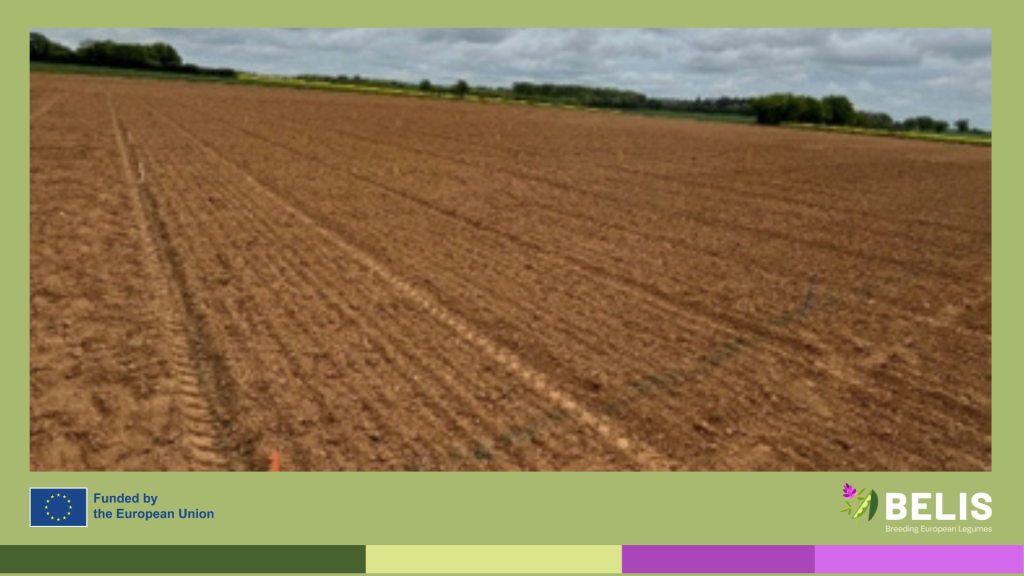
The team is evaluating a MAGIC (Multiparent Advanced Generation Intercross) population comprising 1,800 pea lines. Initial screening of 300 lines has been completed using a rapid disease assay that measures root symptoms in 14-day-old plants, seven days post-inoculation. The results reveal promising variability in intrinsic resistance, with some lines showing high levels of disease resistance.

This population will be genotyped using the multi-species array developed in BELIS WP4. The genetic data will enable genomic prediction and genome-wide association studies (GWAS) to identify resistance genes and accelerate breeding efforts. This approach will support the development of pea varieties combining improved resistance to Aphanomyces root rot with enhanced agronomic performance and technological traits.

Contact: Clément Lavaud, Research Scientist, INRAE

The BELIS project has received funding from the Horizon Europe research and innovation programme under the Grant Agreement N°101081878.

An extensive Delphi study for demand-led breeding

Over the past five months, a team from the South Westphalia University of Applied Sciences in Germany (FH-SWF) has conducted an extensive Delphi study with 20 legume breeders involved in the BELIS project. The aim of the study was to gain a better understanding of what information is needed throughout the value chain to make the breeding of forage and grain legumes more demand-driven, and which stakeholder groups play a key role in this. The background to this is the assumption that the demand-led breeding approach, meaning the systematic alignment of breeding goals with the requirements of various stakeholder groups beyond agriculture along the feed and food value chains, may represent a promising alternative governance structure for financing legume breeding.

Across several rounds of surveys and through repeated feedback, the answers become increasingly accurate over time. In terms of content, the study focused on two questions: (1) How does the breeding industry itself assess the potential of demand-led breeding? (2) Which groups of stakeholders, e.g. feed manufacturers, food processors or end consumers, etc., must be involved to obtain the information that is most important for the orientation of future breeding programmes?

Following completion of the third and final survey wave, FH-SWF is now analysing the data collected. On this basis, recommendations for action will be derived for governance models and information flows in legume value chains. In addition, based on expert opinions, a follow-up Europe-wide survey of plant breeding customers will be planned and conducted.

The BELIS project has received funding from the Horizon Europe research and innovation programme under the Grant Agreement N°101081878.