
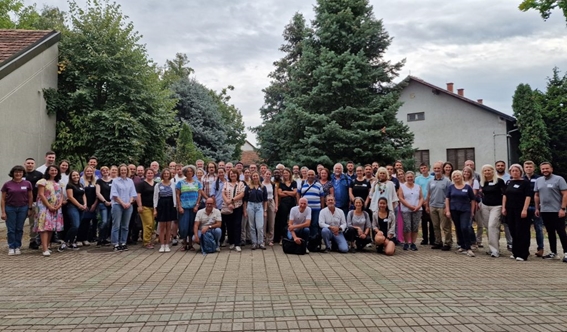
The BELIS project held its second annual meeting from 9 to 11 September at the Institute of Field and Vegetable Crops (IFVC) in Novi Sad, Serbia. The event brought together 65 participants from project teams to discuss achievements, plan upcoming activities, and explore key pathways for improvement and innovation in European legume breeding.
Launched in October 2023, BELIS aims to develop cost-effective breeding tools, improve the economic and regulatory environment for legume breeding, and ensure an efficient innovation transfer through public-private partnership efforts. The project consortium comprises 34 partners from 18 countries, including research institutes, plant breeders, seed companies, registration offices and advisory services.
Preliminary Results
BELIS is at the forefront of integrating cutting-edge technologies into legume breeding to optimise genetic progress and develop new varieties. At this annual meeting, participants presented and discussed significant preliminary results in phenotyping and genotyping. Key highlights included KASP (Kompetitive Allele Specific PCR) outcomes in chickpea—a simplified methodology for genotyping polymorphisms at specific markers—new lab and field protocols for measuring disease, pest and quality traits, and innovative use of drone imagery for phenotyping forage legumes in breeding trials. The consortium is making progress on the multi-species genotyping tool that will be ready next year and will be used for diversity studies, material characterisation and genomic selection. This tool will fill a long-standing gap on legume molecular genetic studies and breeding. Beyond breeding innovations, BELIS is committed to ensuring that genetic progress in legumes reaches farmers effectively. The project tests innovations and ideas to provide farmers with actionable insights about seed Value for Cultivation and Use (VCU). This includes adapting the criteria used for official variety testing systems, designing multi-country official tests, as well as developing a GIS supported model for predicting alfalfa varieties suitability under the diversity of European agroclimatological contexts. During the meeting, researchers presented comparative analyses of VCU protocols across countries and showcased lucerne VCU trials conducted through a network spanning eight locations in Serbia, Italy, and France.
To better understand the organisation of seed value chain, a series of case studies were concluded at national scales in pea, faba bean, chickpea, soya and white lupin. The next step will be to ascertain the value of breeding for the users and propose ways for developing breeding programmes more tailored to their needs.
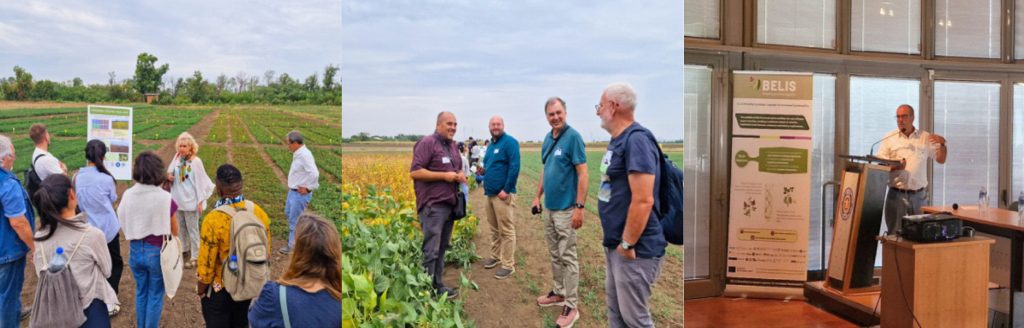
The BELIS Network
This collaborative approach underscores BELIS’s emphasis on the importance of partnership and knowledge exchange in advancing legume breeding. The project is establishing a comprehensive network that brings together public and private breeders, researchers, extension services, registration offices, and the seed, food, and feed industries. This network aims to facilitate business collaborations, deliver technical training, and advocate for supportive policies that strengthen legume breeding activities across Europe. During the following months, transfer activities as webinars and dissemination materials will be delivered and announced to network members.
Breeders, farmers, advisors, researchers, public officers and policymakers are encouraged to join the BELIS network, stay informed about the project’s progress, and contribute to shaping the future of legume breeding in Europe.
